
Festivals
Festival Wristbands Fans Keep — and That Capture the Crowd
The best festival wristbands do two jobs: a keepsake fans actually keep, and a tap that pulls every fan photo into one live shared album.
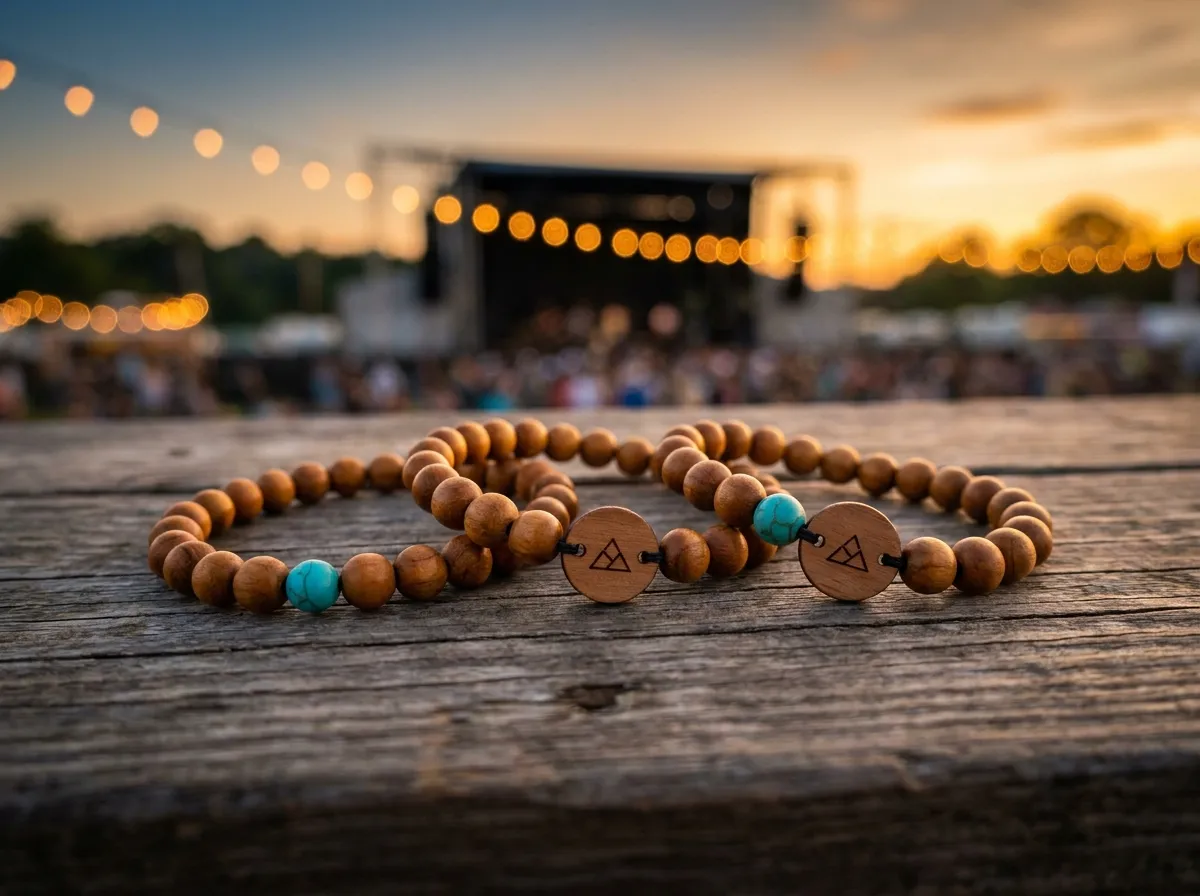
The best festival wristbands now do two jobs at once: they’re a keepsake fans actually keep, and they’re a tap that funnels every fan’s photos into one live shared album the organizer owns. Instead of a paper band that hits the trash by Monday, you hand out an engraved bead band with a hidden tap-to-share chip — fans tap it to their phone, upload their shots, and the whole crowd’s photos land in a single gallery you can pull recaps and sponsor assets from.
That’s the shift worth understanding. A festival wristband used to be access control and nothing more. The version that earns its cost in 2026 is also a memento and a content engine.
What makes a festival wristband worth keeping?
It comes down to materials and meaning. A vinyl or Tyvek band signals “disposable” — fans treat it that way. A band built from real wood, stone, or porcelain beads with a laser-engraved wood tag reads as something you’d leave on your wrist after the gates close. The lineup, the date, the festival name engraved into wood: that’s a souvenir, not a ticket stub.
The beads matter more than people expect. Texture and weight are what make a band feel like merch instead of trash. When fans choose to keep wearing it for weeks, your brand rides along — a slow-burn marketing win no paper band can touch.
- Real materials (wood, stone, porcelain) instead of plastic or paper
- Engraving that names the event, year, or stage so it dates and places the memory
- A tag that doubles as the canvas for your logo or a sponsor’s mark
You can build and preview the exact look in the browser — bead colors, the wood tag, the engraving — using the 3D configurator before you order a single unit.
How does a tap-to-share festival wristband actually work?
There’s a small NFC chip tucked into the band — the same kind of tap chip that’s in a contactless card. A fan taps the band to the back of their phone, no app to download, and their own photo-upload page opens and greets them by name. They add the photos they shot, and those photos flow into one live event album that grows in real time as the crowd contributes.
For anyone whose phone doesn’t tap cleanly, there’s a printed QR code as a fallback, so nobody gets locked out of contributing.
A tap chip turns ten thousand phones full of festival photos — usually scattered and never seen again — into one shared gallery you actually own.
The privacy controls are the part organizers tend to appreciate most. Each photo can be set to public, group-only, or organizer-only, and that’s enforced on the server, not just hidden in the interface. So a fan can share a crowd shot to the public wall while keeping a personal moment to themselves, and you still keep the full export. If you’re weighing the mechanics, our tap-to-share vs. QR-only comparison breaks down where each one wins.
Why do festivals collect photos this way?
Because the alternative is losing nearly all of it. Tens of thousands of attendees shoot tens of thousands of photos and videos, and almost none of it reaches the organizer. A wristband that captures consent and content at the moment of the experience solves the two hardest problems in collecting event photos: getting people to actually upload, and having the rights to use what they share.
The payoff lands in a few places:
- Recap reels built from real fan footage instead of a single hired videographer’s angle
- Sponsor decks with authentic crowd moments you can prove fans opted to share
- Next year’s marketing — the most persuasive ad for a festival is last year’s crowd having the time of their lives
That owned, exportable album is the asset. It’s why this fits squarely into the broader playbook for festivals and large-scale brand activations where user-generated content is the whole point.
Can the same wristband handle entry and check-in too?
The NFC link can open a festival page with your agenda, stage map, sponsors and album. Entry and check-in require a separately supplied compatible system, suitable readers and agreed credentials. Confirm compatibility and encoding before using the bracelet as an admission pass.
For multi-day and multi-stage events, plan album access and admission as separate requirements, even if a compatible system allows them to use the same bracelet. The white-label program lets agencies and experiential teams brand the bracelet and photo program for their clients.
What does it cost to do this for a festival?
Bands are made to order starting at a minimum of five, most festivals order one band per attendee, and the per-band price is published and falls as your headcount grows. Rather than one flat sticker, the price steps down with your event size, and white-label branding or custom encoding is quoted per event. See the pricing overview for how that works, or check the FAQ for lead times and ordering logistics.
A practical note: for crowd-scale events, the cost-per-fan tends to be reasonable precisely because the band keeps working after the festival ends. It’s marketing inventory fans choose to wear, plus a content pipeline, rolled into the thing you were already going to hand out at the gate.
The takeaway
A great festival wristband is no longer a one-day token — it’s a keepsake fans keep wearing and a tap that turns the crowd’s cameras into one album you own. Real beads, an engraved tag, a hidden tap chip with a QR fallback, and server-enforced privacy controls give fans something worth keeping and give you the recap, sponsor, and next-year content you’d otherwise never see.
Planning the wristband side of your event? Design and preview your bands in the 3D configurator, and if weddings are also on your plate, our wedding vs. event bands guide covers the differences — including our sister brand WearableWedding for the aisle.
